The Right to Be Understood: Building a Language-Access Plan for Every Medical Visit
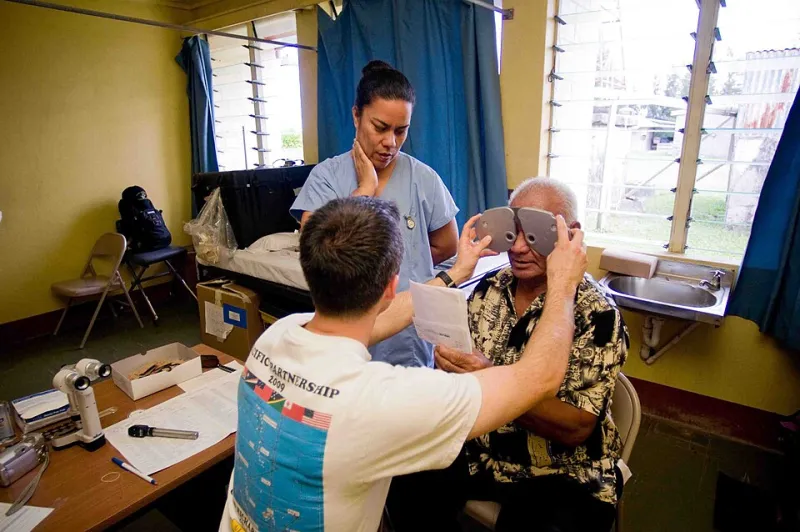
Photo: U.S. Navy photo by Mass Communication Specialist 2nd Class Joshua Valcarcel, Public domain, via Wikimedia Commons
In many American households, a family member with limited English proficiency attends medical appointments alongside a relative who “speaks enough.” The arrangement feels practical. It is also one of the most common ways that important clinical information gets lost. A qualified medical interpreter is not a courtesy or an add-on; it is a communication safeguard, and families can plan for it the same way they plan for transportation, insurance cards, and medication lists.
A Legal and Practical Baseline
Federal civil rights protections — including Title VI of the Civil Rights Act of 1964 and Section 1557 of the Affordable Care Act — require many health programs that receive federal funding to provide meaningful language access at no cost to the patient. That generally means a qualified interpreter, not a bilingual receptionist pulled from the front desk and not another patient in the waiting room. Qualified interpreters are trained in medical terminology, confidentiality, and professional ethics. They interpret accurately rather than summarize, and they do not insert advice.
For families, the practical takeaway is simple: language assistance should be requested, documented, and confirmed at each stage of care — scheduling, the visit itself, the pharmacy counter, and discharge.
Before the Visit: Assemble the Language Record
A language-access plan works best when it is written down before anyone is tired, worried, or in a hurry. Ask the clinic to record the patient’s preferred spoken language, preferred written language, and need for an interpreter in the electronic health record. Then keep a one-page note of your own that includes:
- The patient’s full name, date of birth, and preferred language, including dialect where relevant.
- Whether the family prefers in-person, video, or telephone interpretation.
- Whether the patient reads comfortably in the preferred language or needs verbal and pictorial instructions.
- A clear statement that family members should not be used for clinical interpretation, consent discussions, or medication teaching.
This note is not a substitute for the clinic’s own records. It is a backup that travels with the family and reduces the chance that a language need disappears between departments.
Requesting an Interpreter the Right Way
When scheduling, use direct language: “The patient needs a qualified medical interpreter in [language] at no cost.” Ask the scheduler to note the request in the appointment record and to confirm it. For telehealth visits, ask how interpretation will be handled on the platform before the appointment begins. For telephone visits, request that the interpreter join the call at the start rather than after the clinical conversation has begun.
If a staff member says an interpreter is unavailable, ask for the clinic’s language-access coordinator or patient relations office. Document the date, the name of the person you spoke with, and the response. Persistence is appropriate here; the goal is not confrontation but a reliable channel.
During the Appointment: What to Watch For
The interpreter should render the conversation in the first person, so that the clinician’s words become “I am going to examine your abdomen” rather than “She says she will examine your abdomen.” Family members can help by speaking directly to the clinician, pausing for interpretation, and asking the interpreter to convey everything — including small cautions and follow-up questions — rather than a shortened version.
It is reasonable to ask for a brief pause if a term is unclear. It is also reasonable to request a written summary in the preferred language when the visit ends. A short note in plain language can be more useful at home than a memory of a fast conversation.
Why Children Should Not Be the Bridge
Children often become informal interpreters because they are available, bilingual, and eager to help. The arrangement places them in an adult role they did not choose and may expose them to sensitive information. It also raises clinical risk: a child may soften bad news, misunderstand a medication instruction, or lack the vocabulary for a consent discussion.
Use children for ordinary family conversation, not for medical interpretation. If a provider suggests that a child translate, a polite and firm response is appropriate: “We would prefer a qualified interpreter for this conversation.” That sentence protects both the patient and the child.
The Pharmacy Counter and the Discharge Conversation
Medication instructions are where language gaps do real harm. Ask the pharmacist whether labels and written instructions can be printed in the preferred language; many pharmacy systems can do this. Then use a teach-back approach: ask the patient to explain, in their own words, how and when each medicine will be taken. The pharmacist or clinician should confirm understanding rather than simply ask, “Do you have any questions?”
Discharge deserves the same attention. Request an interpreter for the discharge conversation itself, not only for admission. Ask for written instructions in the preferred language, a phone number for follow-up questions, and confirmation that transportation and follow-up appointments are understood.
A Short Checklist to Keep Handy
- Request a qualified interpreter at scheduling, not at the door.
- Confirm that the request is recorded in the health record.
- Decline child interpretation for clinical content.
- Ask the interpreter to convey everything without summarizing.
- Request written instructions in the preferred language.
- Use teach-back for medications and discharge steps.
- Document the interpreter’s name or ID and the mode used.
- Ask for the language-access coordinator if access is denied.
When Something Goes Wrong
If an appointment proceeds without a requested interpreter, or if a family is told to “bring someone,” ask for the clinic’s patient relations office or language-access coordinator and request a written response. Keep a short record of what happened. Most health systems have a process for language-access complaints; using it is a legitimate way to improve care for the next family as well as this one.
Clear communication is not a luxury reserved for families who speak English fluently. It is a routine part of safe care, and it can be planned for with the same care families already bring to everything else.