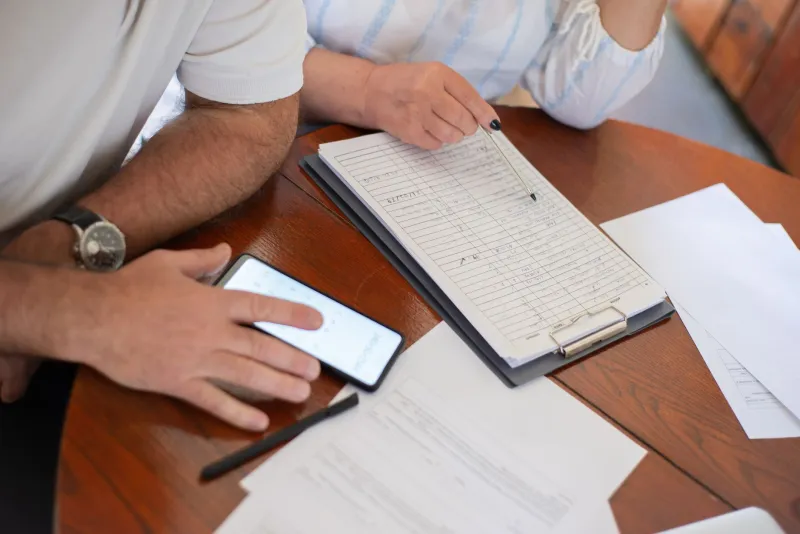
Before the Clock Runs Out: A Family System for Capturing Health Questions

Medical appointments are short by design. A fifteen-minute visit may need to cover symptoms, medications, test results, and a new concern, while a family caregiver may arrive with weeks of observations compressed into a waiting-room notebook. The result is predictable: the question that mattered most is often the one that never gets asked. A household question escrow is a practical way to stop losing those concerns before the appointment begins.
The term is borrowed from finance, but the idea is simple. An escrow is a shared holding place for items that are not yet ready to be used. In a family health context, it is a single list where household members deposit questions as they arise, then sort and release them at the right time. It is not a diary, a diagnosis tool, or a substitute for clinical advice. It is a container for attention.
Why Questions Get Lost
Questions disappear for ordinary reasons. A caregiver notices a new gait change on Tuesday, but the appointment is three weeks away. A pharmacist mentions a possible interaction, but the note is left in the car. A patient thinks of a question at 2 a.m. and assumes it will be remembered. By the appointment, the most immediate concern—parking, transportation, or a billing form—can crowd out the clinical question.
Age, fatigue, and stress make this worse. Family caregivers often manage multiple households and may not have the energy to reconstruct a month of observations in a waiting room. A shared escrow lowers the burden by capturing questions when they are fresh and sorting them before the visit.
Build the Escrow Before the Appointment
Choose one accessible place. A shared note on a phone, a paper sheet on the refrigerator, or a portal message draft can work. The method matters less than the habit. Every household member should know where to put a question and should be allowed to add one without needing a full explanation.
Use three columns: the question, who might answer it, and how urgent it feels. Urgent means it should not wait for the next routine visit. A new severe symptom, a fall, or a medication error belongs in a phone call or emergency care, not in an escrow. The escrow is for questions that need a considered answer.
Sort by Who Can Answer
Not every question requires the physician's time. Sorting preserves the appointment for matters that need clinical judgment.
-
Pharmacist. Ask about dosing schedules, refill coordination, side effects, interactions, and whether a new over-the-counter product is appropriate. A pharmacist can often resolve these questions without an appointment.
-
Nurse advice line. Use the clinic or insurance nurse line for triage questions: whether a symptom can wait, what warning signs to watch, or how to manage a minor issue after hours. Write down the date, time, and advice received.
-
Clinic portal. Use secure messaging for administrative questions, prescription renewals, referral status, and non-urgent follow-ups. Do not use the portal for emergencies.
-
Doctor or advanced practice clinician. Reserve this category for questions that require diagnosis, treatment decisions, medication changes, or interpretation of test results. Group related questions so the visit has a clear focus.
Rehearse the One-Page Ask Sheet
Before the appointment, transfer the top questions to a single page. Put the most important question first. Add a brief context line for each: when it started, what changed, and what the family has already tried. Keep it factual and avoid long narrative.
A useful ask sheet has four parts: the main concern, the top three questions, current medications and allergies, and the preferred way to receive follow-up. If the patient uses a portal, note whether a family member is authorized to receive information. The sheet should be readable at a glance, because the clinician may have only a few minutes to scan it.
Rehearse the opening. A caregiver might say: 'We have three questions today. The most important is a change in balance over the last two weeks. The other two are about the new medication and a referral.' This respects the clinician's time and makes the priority clear. If the appointment runs short, ask which question should be scheduled for a follow-up.
Protect the Caregiver's Energy
A question escrow should reduce work, not create another project. Keep the list short and review it once a week. Do not require perfect handwriting or a formal meeting. A five-minute check before a call to the pharmacy is enough to prevent a forgotten concern.
Caregivers should also be allowed to say that a question is not theirs to carry. Some concerns belong to the patient, some to the clinic, and some to a social worker or insurance counselor. Sorting is an act of boundaries as much as organization.
Close the Loop
After the appointment, write down the answers in the same place and note any next steps. Remove questions that have been resolved. Carry forward only what remains open. Over time, the escrow becomes a record of what the household has already asked, which can reduce repetition and help a new clinician understand the pattern.
The appointment clock will not lengthen. But a family can decide in advance which questions deserve the minutes it has. A shared escrow does not guarantee answers, yet it makes the most important questions harder to lose.