A Light Left On: How Neighbors Can Build a Weather-Day Check-In System
Extreme weather rarely announces itself with enough warning for a neighborhood to improvise well. A heat index that climbs before dawn, a cold snap that arrives with a utility outage, or a windstorm that closes roads can leave isolated older adults and medically vulnerable households without a routine safety net. The most useful preparation is not a dramatic rescue plan. It is a small, agreed-upon check-in system that neighbors can activate before conditions become dangerous.
A weather-day check-in plan works best when it is built in ordinary time, with consent and clear limits. It should complement—not replace—family contacts, local emergency services, and health care providers. For rural households separated by distance or limited broadband, even a modest plan can close a significant gap. MSHW Health recommends treating the plan as a shared neighborhood agreement, not a one-person burden.
Start with Consent, Not Assumptions
Begin by asking the person whether they want a check-in arrangement and what kind of help is welcome. Do not assume that an older neighbor wants a daily call, a knock at the door, or a welfare visit. Some people welcome a text; others prefer a porch light and a wave from the sidewalk. Consent should cover who may check in, how often, and what information can be shared with family.
Record the basics in a simple card both parties keep: names, preferred contact methods, alternate contacts, pharmacy and clinician information if the person chooses to share it, and any known power-dependent medical equipment. The card should note that it is not a medical record and should be stored where it cannot be seen by casual visitors. Refresh it each season, because phone numbers, medications, and mobility needs change.
Agree on Simple Signals
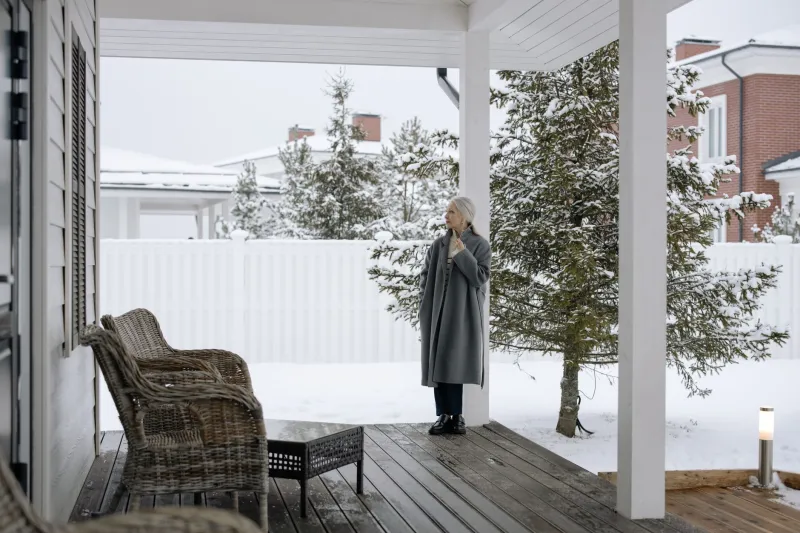
A porch light is only useful if everyone knows what it means. The same is true of a text code, a colored card in a window, or a daily wave. Choose one primary signal and one backup. For example, a light left on by 10 a.m. might mean all is well; a light off at that hour might prompt a text. If there is no response within a set window, the neighbor moves to the next step.
Keep signals low-effort and culturally comfortable. A person with limited dexterity may prefer a phone call over typing a code. A household without reliable cell service may rely on a window sign. In rural areas, a neighbor may be the closest available person, but the plan should still include a second route—such as a family member or the local Area Agency on Aging—so one person is not solely responsible.
Write a Check-In Script That Respects Dignity
A short script prevents awkward improvisation and keeps the exchange respectful. It can be as simple as: 'I am checking in because of the heat advisory. Are you safe, do you have water and any needed medication, and is there anything you want me to do?' The question should invite a specific answer without demanding a medical update.
Avoid treating the check-in as an inspection. Do not ask for a full list of diagnoses or insist on entering the home. If the person says they are fine, note the response and follow the agreed schedule. If they sound confused, short of breath, or unable to answer basic safety questions, treat that as a reason to escalate rather than debate.
Set Privacy Boundaries in Advance
Neighbors should know what they are not entitled to know. A check-in plan does not create access to medical records, financial information, or family decisions. Write down what may be shared, with whom, and under what circumstances. For example, a person may permit a neighbor to tell a daughter that the porch light was not on, without permitting discussion of medications.
Use the clinic portal or family contacts for sensitive information rather than neighborhood group chats. If the person uses a personal emergency response system or a medical alert device, confirm that the neighbor knows how it works and who responds. Privacy is not secrecy; it is a clear agreement about who holds which pieces of a person's life.
Know When to Escalate
Escalation should be a ladder, not a leap. First, try the agreed signal and a direct call. Second, contact the designated family member or friend. Third, use local non-emergency resources such as the Area Agency on Aging, 211, or the utility outage line when the concern is about power, heat, or water. If there is immediate danger—chest pain, confusion, a fall, no safe water, or a life-supporting device without power—call 911.
Neighbors should not attempt to manage a medical crisis alone. In rural areas, response times can be longer, so the plan should include the physical address, gate codes, and the best access route. Keep a paper copy of the plan; digital lists fail when the power does.
Make the Plan Visible and Repeatable
A plan that lives only in memory will not survive a busy week. Put a one-page summary on the refrigerator, share it with one backup neighbor, and review it before each extreme-weather season. After an event, ask what worked and what felt intrusive. Adjust the signal, the timing, or the escalation steps.
The goal is not to turn neighbors into clinicians. It is to create a reliable, limited form of attention that helps families and local services reach people before a small problem becomes an emergency. A light left on can be a quiet form of care—provided the neighborhood has agreed in advance what it means and what to do next.